
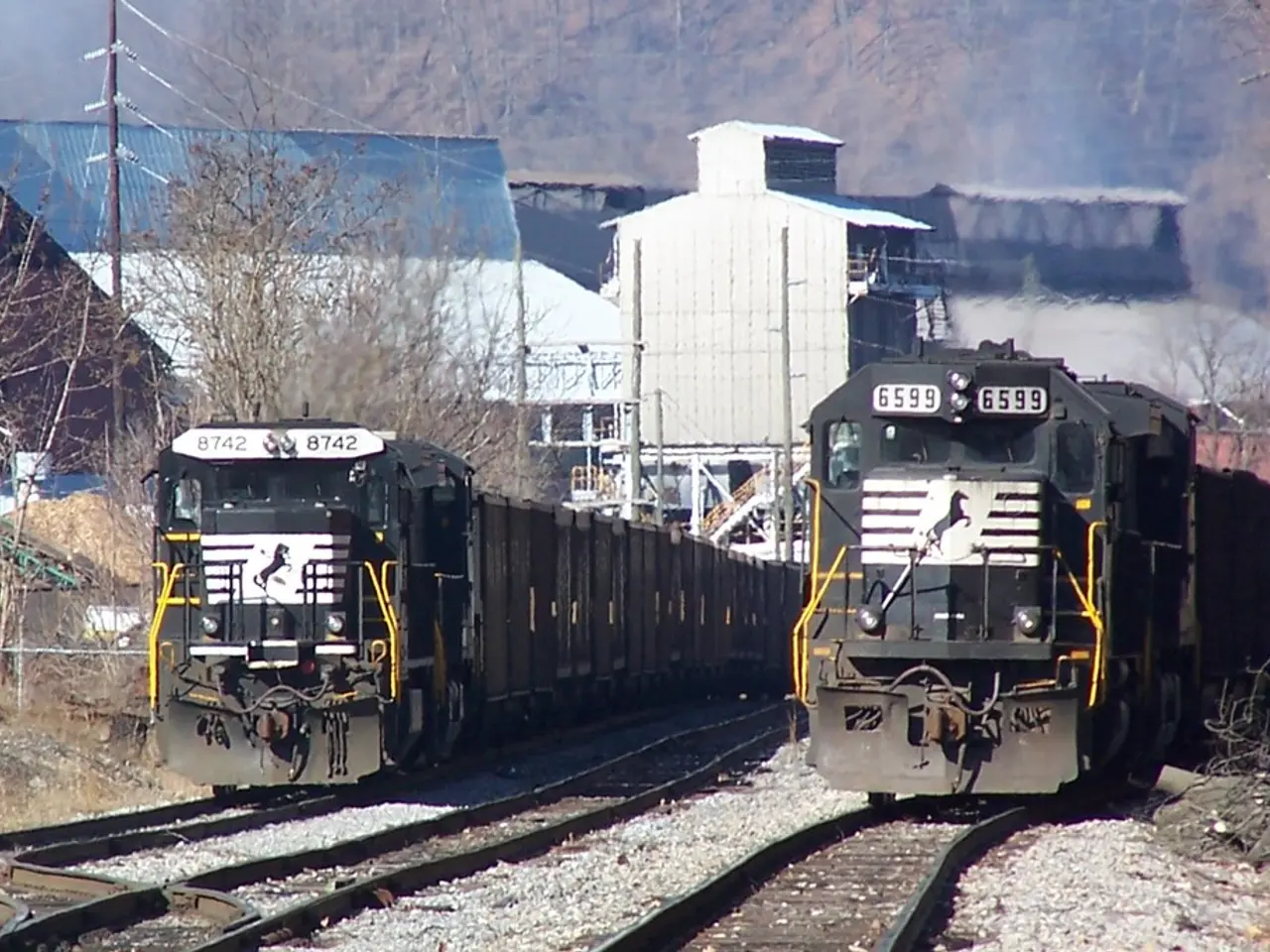
Advancement in merger negotiations between Union Pacific and Norfolk Southern, potentially paving the way for a significant change in U.S. freight rail industries.
The rail industry is abuzz with news of advanced discussions between Union Pacific (NYSE: UNP) and Norfolk Southern (NYSE: NSC) regarding a potential merger. If successful, this union would create a coast-to-coast rail giant, reshaping the U.S. freight rail landscape.
The proposed merger holds promise for operational efficiency. By eliminating costly interchanges, especially in hubs like Chicago and along the Mississippi River, the combined entity could significantly increase efficiency and reduce transit times. This potential improvement could translate to better service reliability and cost savings for shippers, making them more competitive in the market.
The merged railroad would span from the West Coast to the Northeast, Mid-Atlantic, and Southeast, offering seamless service and potentially enhancing market competitiveness. The combined network could better serve key supply chain corridors, including agricultural exports, industrial inputs, and e-commerce distribution.
However, the path to a merger is fraught with regulatory hurdles. The deal would undergo rigorous antitrust review by the U.S. Department of Justice and the Federal Trade Commission to ensure it does not harm competition in the rail industry. The Surface Transportation Board (STB) would also need to approve the merger to ensure it serves the public interest and does not create monopolistic conditions.
The STB has historically taken a cautious stance toward rail consolidation to protect competition and public interest. The merged railroad would be subject to intense scrutiny due to its size and potential impact on the rail industry and regional economies. Other railroads, like BNSF Railway, might attempt to acquire Norfolk Southern, complicating the merger process and regulatory oversight.
The companies would need to demonstrate clear public benefits and safeguards against service disruptions or price hikes to gain regulatory approval. Boosting the economy by moving more freight off highways and onto railroads could reduce congestion and carbon emissions, aligning with sustainability goals.
The potential merger comes after two decades of relative stability in U.S. railroads. The move towards consolidation in U.S. railroads is driven by rising competitive pressures in the logistics sector, including the adoption of AI and EV fleets by trucking companies and growing intermodal demand.
While the deal is not yet certain, it depends on board approvals, shareholder alignment, and regulatory clearance. The market and regulators will be closely watching the discussions and any potential regulatory review process. If approved, the resulting rail giant would offer seamless, end-to-end service from the Atlantic to the Pacific, potentially sparking a new wave of dealmaking among Class I railroads seeking similar efficiencies and geographic reach.
In the meantime, the lease vs. buy decision for commercial vehicles in 2025 remains a separate topic. The merger's impact on Union Pacific's and Norfolk Southern's Q2 2025 financials is also a point of interest. Union Pacific reported $1.8 billion in net income and earnings per share of $3.03 in Q2 2025. Norfolk Southern's stock surged following news of the talks, while Union Pacific shares saw a modest decline.
Concerns from shippers, Amtrak, labor unions, and rival carriers could pose hurdles in the potential merger. The resulting rail giant would need to navigate these challenges while ensuring it delivers on its promise of increased efficiency, reduced costs, and improved service reliability.
[1] Source: The Wall Street Journal [2] Source: Bloomberg
- This potential merger between Union Pacific and Norfolk Southern could revolutionize the e-commerce market, as the coast-to-coast rail giant might offer better service reliability and cost savings for shippers.
- The combined rail network of Union Pacific and Norfolk Southern, if successful, could strengthen the supply chain corridors for agricultural exports, industrial inputs, and e-commerce distribution.
- The merged railroad, should it pass regulatory scrutiny, would potentially reshape the U.S. freight rail landscape, increasing operational efficiency and reducing transit times.
- The path to a merger requires surmounting regulatory hurdles, including antitrust review, ensuring the deal does not harm competition or create monopolistic conditions in the rail industry.
- Amidst the rail consolidation trend, the lease vs. buy decision for commercial vehicles in 2025 remains a separate topic, due to its implications in the transportation industry.
- Union Pacific and Norfolk Southern might face challenges from competitors and labor unions during the potential merger, as concerns about service disruptions or price hikes could arise.
- To secure regulatory approval and prove the merger’s public benefits, the companies would need to demonstrate how the deal could boost the economy by moving more freight off highways and onto railroads.
- Industry analysts are closely watching the discussions and potential regulatory review process, with the emerging rail giant poised to offer seamless, end-to-end service from the Atlantic to the Pacific, potentially leading to a new wave of dealmaking among Class I railroads.
- The financials of Union Pacific and Norfolk Southern will be under scrutiny as the market assesses the potential merger's impact on their Q2 2025 earnings.




