
Boosting Profits: Exploring Return on Investment (ROI) in Agriculture
In the vast and interconnected global economy, agriculture plays a pivotal role in providing food, fiber, and raw materials. As such, optimizing return on investment (ROI) in this sector is crucial for both farmers and agribusinesses. Here are some effective strategies for enhancing ROI in agriculture.
Precision and Digital Farming
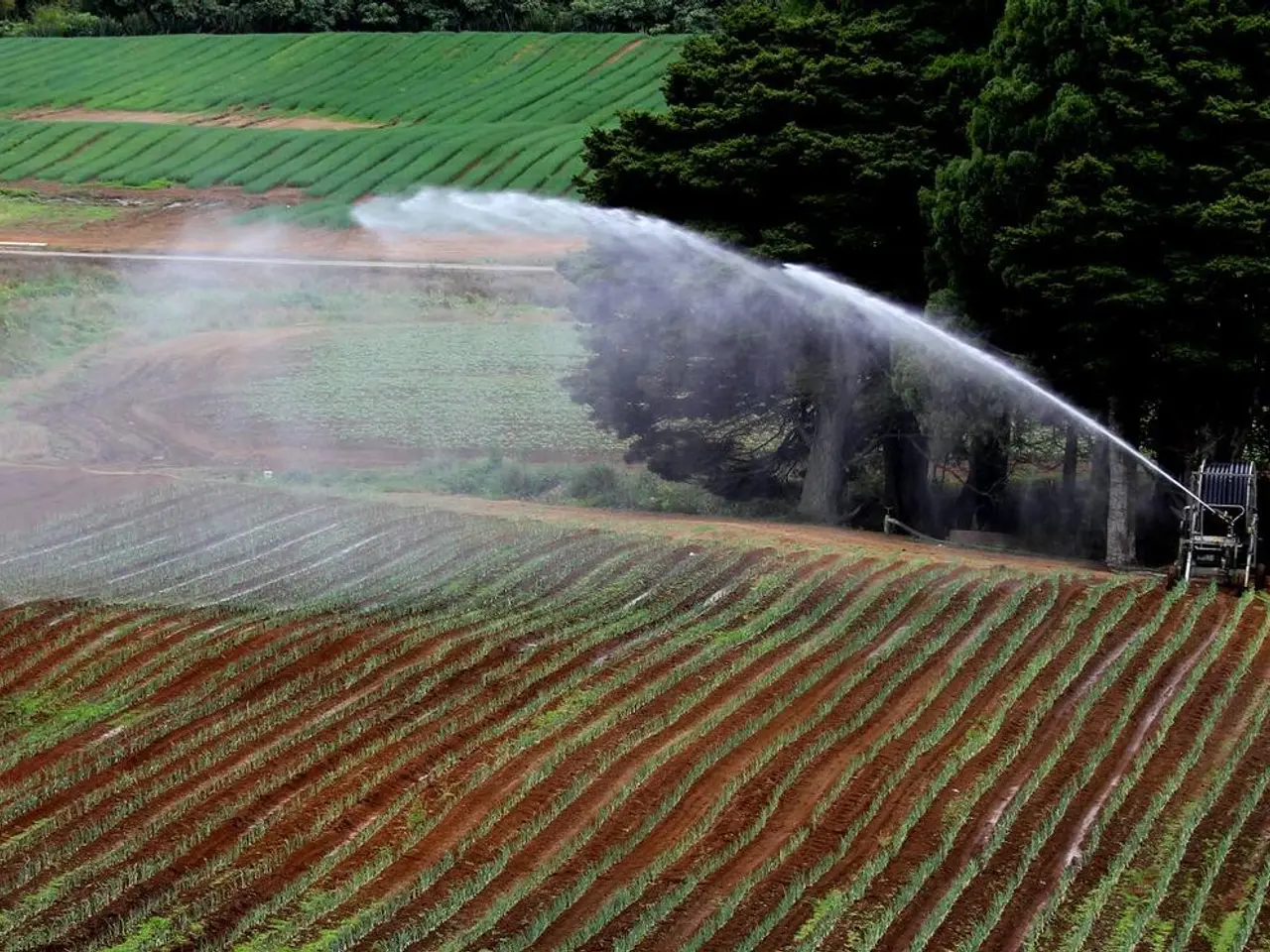
Embracing modern technology is key to improving efficiency and productivity in agriculture. Precision Agriculture, which utilizes drones, satellite monitoring, and precision irrigation, can optimize crop yields and reduce waste. Additionally, AI and predictive analytics can be leveraged to forecast crop yields, pest outbreaks, and optimal market timing, thus maximizing returns and minimizing loss.
High-Value Crops and Organic Farming
Focusing on high-value crops such as organic produce, medicinal herbs, and spices can command premium lease rates and higher margins. Transitioning land to organic status can significantly boost its market value and lease potential.
Direct Ownership and Leasing
Securing prime land in regions with robust irrigation, market access, and good soil health is essential for maximizing ROI. Leasing land to professional farmers or contract growers can ensure regular income while allowing for capital appreciation.
Agritech Integration and Partnerships
Collaborating with agritech platforms can enhance crop health monitoring, irrigation optimization, and predictive analytics, reducing costs and boosting income. Implementing blockchain for supply chain transparency and certification can enable premium prices.
Sustainable Practices
Emphasizing sustainable farming practices like regenerative agriculture, integrated pest management (IPM), and climate-smart cultivation can improve resilience, reduce inputs, and access premium markets.
Climate-Smart Cultivation
Implementing strategies such as timely sowing and water harvesting can help maintain yields in the face of climate variability.
By integrating these strategies, agricultural investments can be optimized for higher ROI and sustainability. The net return, the total profit generated from agricultural activities less all incurred expenditures, is an essential tool for agricultural decision-making.
The ROI formula, ROI = Net income / Cost of investment x 100, can be used to assess the profitability of different livestock, crops, or agricultural operations. Crop selection, market analysis, and understanding customer preferences and market trends can increase profitability by focusing on strong demand and selling at the right time.
Continuous learning and keeping up with the latest developments in agriculture can help farmers stay competitive and optimize return on investment. Preventive pest and disease control techniques, integrated pest management (IPM) strategies, and livestock management that emphasizes animal health and nutrition can lead to higher profitability.
Benchmarking, or comparing the ROI of different agricultural activities, can help farmers make more informed decisions. Diversifying crops can distribute risks and generate multiple sources of income. Assessing the ROI of sustainable farming methods can aid in decisions that are advantageous to the environment and financial stability.
Investment in agriculture includes the cost of purchasing or leasing land, stockpiling crops or livestock, funding machinery and equipment, employing workers, and paying for other farming costs. Efficient resource use, such as water and fertilizer management, can reduce input costs and boost ROI.
In conclusion, maximizing ROI in agriculture requires a strategic approach that integrates technology, sustainable practices, and a deep understanding of market trends. By adopting these strategies, farmers and agribusinesses can optimize their return on investment while contributing to a more sustainable and resilient agricultural sector.
References:
[1] FAO (2020). Precision Agriculture: A Guide for Smallholders. Retrieved from https://www.fao.org/3/ca9510en/ca9510en.pdf
[2] NASS (2021). Precision Agriculture. Retrieved from https://www.nass.usda.gov/Statistics_by_Subject/index.php?subject=Precision_Agriculture
[3] IPCC (2019). Climate-Smart Agriculture: Policies, Practices and Partnerships. Retrieved from https://www.ipcc.ch/site/assets/uploads/2019/08/WGIII_AR6_Chapter_8_Climate-smart_agriculture_Policies_practices_and_partnerships.pdf
- To optimize return on investment in agriculture, farmers could consider organic farming as a strategy for higher-value crops, such as organic produce, medicinal herbs, and spices, which can command premium lease rates and higher margins.
- Partnerships with agritech platforms in business can enhance crop health monitoring, irrigation optimization, and predictive analytics, potentially reducing costs and boosting income, thereby improving the return on investment in agriculture.




%20in%20Agriculture)