
Examining International Commerce: Perspectives from Gene Seroka, Head of Port of Los Angeles
=============================================================================
The global economy is at a crossroads, with uncertainty in global trade causing a slowdown that is affecting economies worldwide. The slowdown is not confined to China, but is a worldwide issue affecting trade routes from China, Mexico, and Canada, among others.
According to Gene Seroka, Executive Director of the Port of Los Angeles, global trade is expected to continue to slow until there is greater certainty and lower tariff rates. Seroka's insights offer an insider's view of the current state of global trade and its potential impacts.
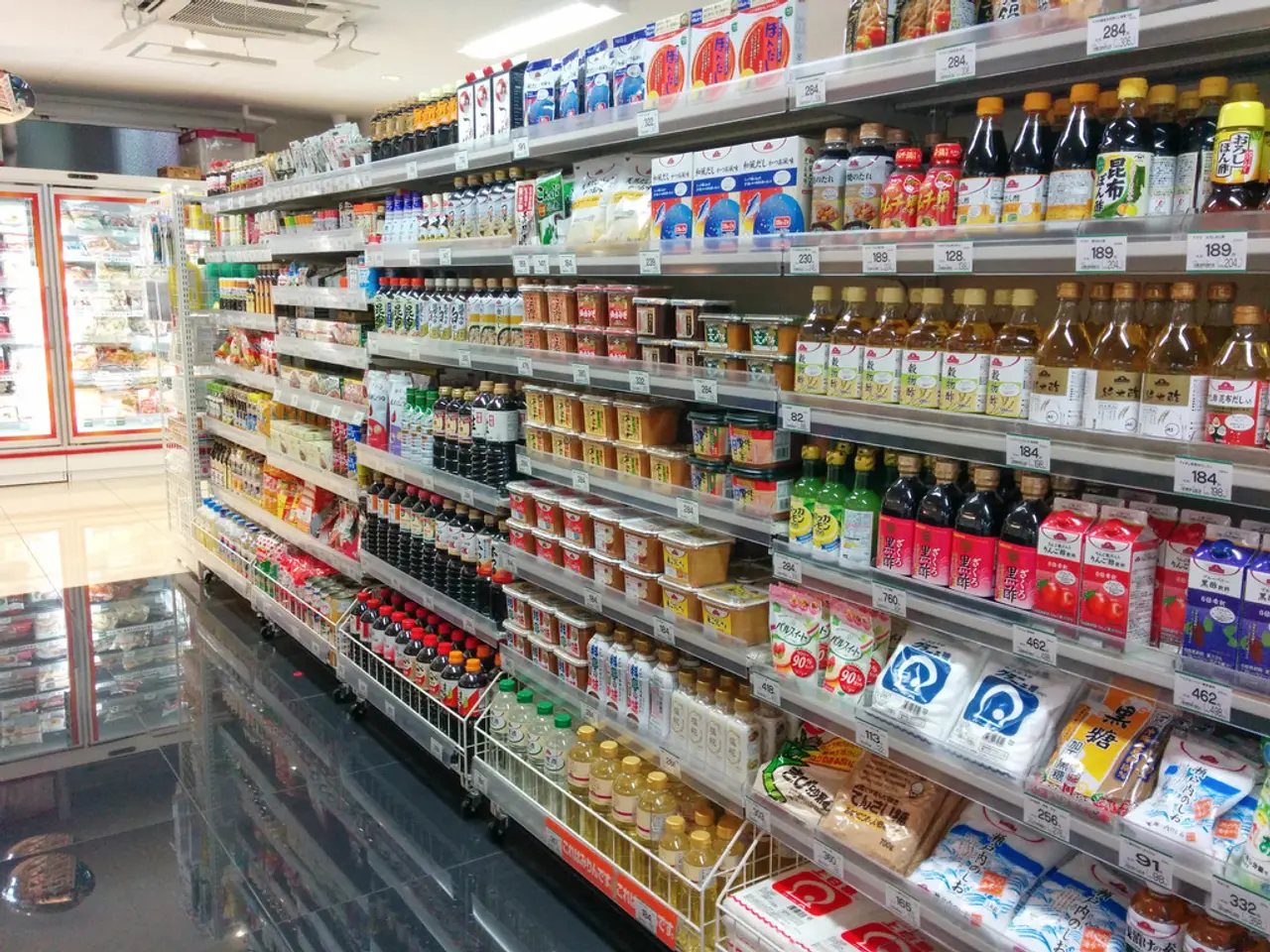
The slowdown in trade is expected to ripple through the economy, leading to potential shortages on store shelves. Retailers are bracing for the impact, with some saying they will need to pass on increased costs to consumers. The CEOs of Walmart, Target, and Home Depot met with President Donald Trump to deliver a warning about potential empty store shelves within weeks.
The current situation in global trade resembles the concerns about inflation in November, but the stakes are now higher due to significant import declines from Southeast Asia and China. A deal could take about a month to reposition ships, load containers, and transport them across the Pacific, aligning with the spring and summer fashion seasons and the back-to-school period.
The decline in import volume is a global phenomenon, with about a third of the import volume disappearing in recent weeks. A 145 percent tariff on goods from China will be prohibitively expensive and may look like an embargo. However, a 10 percent global tariff will increase prices for consumers but won't shift or eliminate supply chains for products from other countries.
The long-term effects of the current U.S. tariffs on China on the global economy include reduced import volumes, sectoral shifts, and higher consumer prices. U.S. exports are about 16.1% lower in the long run due to tariffs and foreign retaliation, indicating significant disruption to trade flows.
The tariffs disproportionately raise consumer prices on affected goods such as clothing and textiles, with shoe prices increasing by 39% and apparel by 37% in the short term, settling at roughly 18% and 17% higher in the long run respectively. Overall, consumer prices rise 1.5–1.8% due to tariffs, which translates into an average loss of $2,000–$2,400 in household real income annually.
The U.S. economy grows 0.4% smaller in the long run due to tariffs, equivalent to about $125 billion annually in lost output. There are sectoral trade-offs—U.S. manufacturing output grows by 2.1% but is offset by declines in construction (-3.6%) and agriculture (-0.8%). The unemployment rate rises by 0.7 percentage points by the end of 2026, reflecting labor market strains induced by tariffs.
The trucking industry will feel the immediate impact of the decline in import volume, with truckers hauling fewer containers and dock workers facing reduced shifts and job opportunities. The decisions made in the coming weeks will shape the future of trade and economic stability.
The potential long-term effects on the global economy due to the current trade situation remain unclear, but it is certain that the tariffs will have a significant impact on the availability of goods from China, making them prohibitively expensive.
- The logistics industry will face challenges as the slowdown in global trade leads to fewer shipping containers, affecting dock workers and truckers.
- In the long run, the tariffs imposed on Chinese goods could significantly shift the global trade landscape, altering supply chains for various industries such as textiles, clothing, and footwear.
- The finance sector may be impacted by the economic repercussions of the current trade situation, with consumer prices increasing and household incomes decreasing due to tariffs, potentially affecting business profits.




