
Finance Ministry to Be Protected by Customs, According to Klingbeil's Proposal
In the heart of Germany's political scene, the security arrangements for Finance Minister Lars Klingbeil have come under scrutiny, with the Police Union (GdP) expressing opposition to permanent or enhanced police protection for the minister. The GdP views this as an "absurd" and "deficient" security policy, arguing that it lacks justification based on concrete threats or specific intelligence regarding Klingbeil.
Currently, Klingbeil's office is guarded by police personnel, but no official changes have been announced regarding the future of this security arrangement. The GdP's stance suggests a preference for a more measured approach, one that is based on actual threat assessments rather than precautionary or symbolic measures. This position aligns with Germany's general approach, which prioritises proportional security for public officials only when specific threats arise.
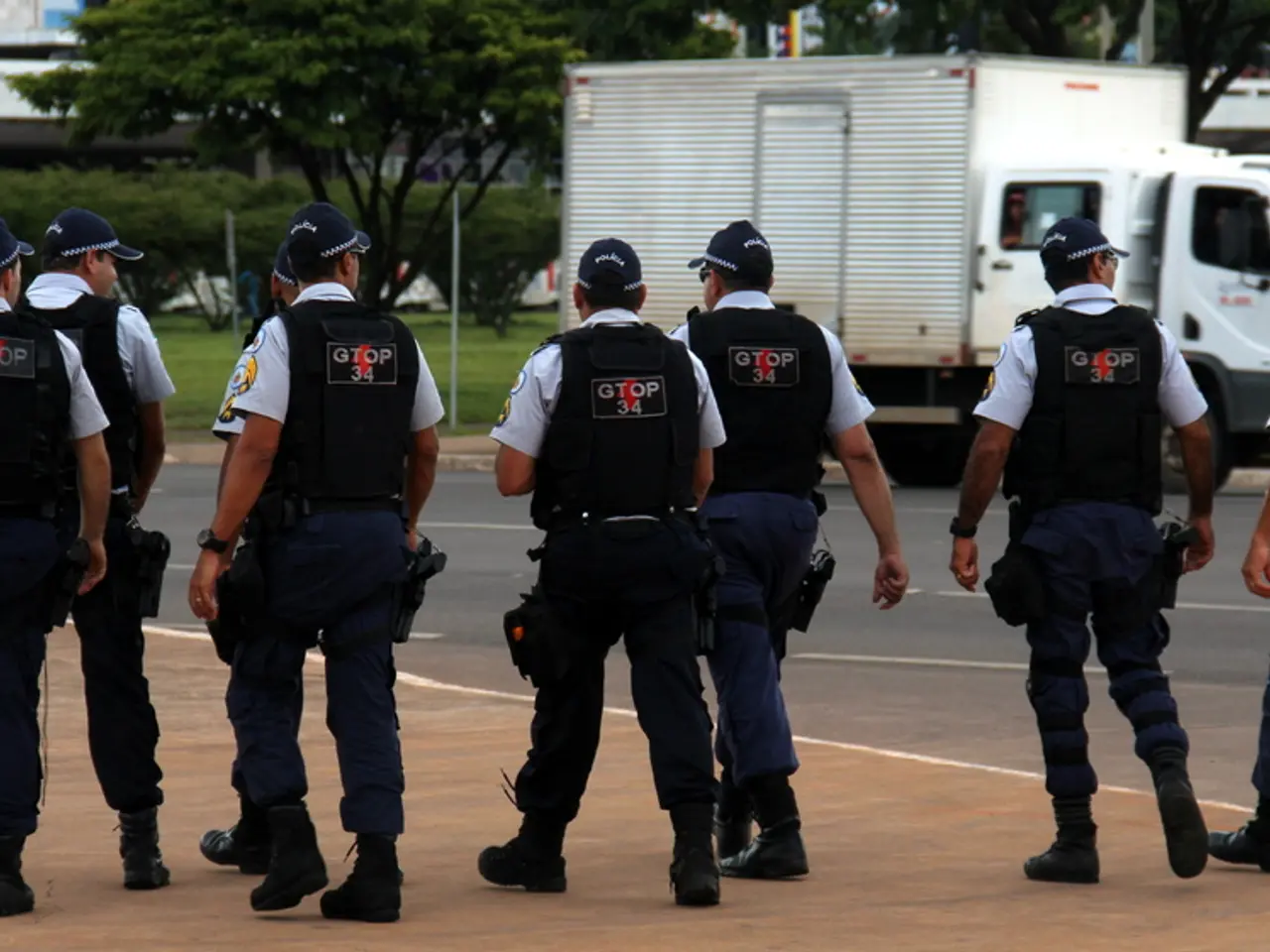
Meanwhile, the Finance Ministry is focusing on the fight against tax evasion, black market work, and financial crime, with Klingbeil intending to continue using armed Zöllners to guard his office, a practice referred to by the SPD as a "prince's guard." The customs officers guarding the ministry may require police support in case of an emergency, according to Spiegel.
The customs service took over the security of the Detlev-Rohwedder-Haus, where the Finance Ministry is located, on April 1, 2024, as part of a pilot phase that could last up to two years. Previously, the security of the ministry was handled by a private security company, like most other ministries.
The SPD has criticised the move to have the customs service handle the security, with concerns that the officers might be needed for more important tasks, such as fighting organised crime. This shift in security arrangements was also met with ridicule when the former finance minister, Christian Lindner (FDP), handed the security task to the customs service.
As the pilot phase progresses, an evaluation will be conducted at an appropriate time to determine the effectiveness and necessity of this new security arrangement. The Police Union (GdP) continues to advocate for a stronger legal basis for the customs officers' security duties, highlighting the need for a balanced approach in allocating security resources and protocols for politicians in Germany.
In light of the current security arrangements, the Finance Ministry might consider vocational training for customs officers to enhance their ability to handle potential emergencies, thereby improving the community policy for the ministry's safety. To facilitate this, the ministry could collaborate with finance to allocate appropriate budget for vocational training, ensuring the business operations continue smoothly.