
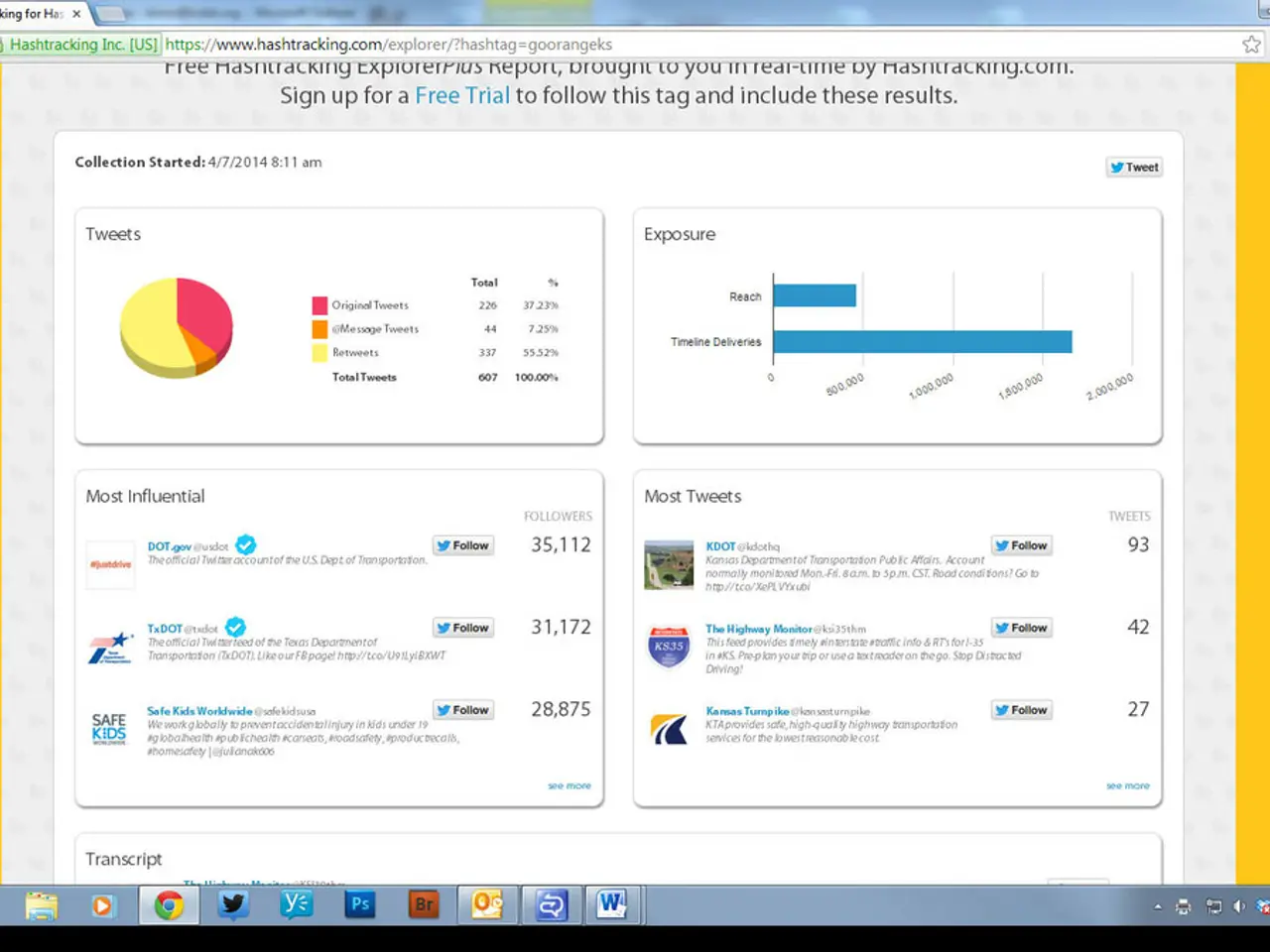
Insight into Information Dashboards: Why They're Essential for Your Understanding
In today's data-driven world, information dashboards have emerged as a powerful tool for managing and interpreting complex data. These user-friendly interfaces offer numerous benefits that can help businesses thrive in an increasingly competitive landscape.
Data Management and Control
Dashboards consolidate and integrate data from multiple sources into a single, centralized interface. This makes it easier to monitor operations, track performance metrics, and maintain control over processes in real-time. Real-time data updates allow immediate responses to issues and opportunities, enhancing operational efficiency [1][2][3][4].
Clarity and Simplification of Complex Data
By translating raw data into visual formats such as charts, graphs, and gauges, dashboards simplify complex information. This visual representation reduces cognitive load and enables faster and deeper comprehension by users, including non-technical stakeholders. It turns vast datasets into actionable insights, supporting smarter decisions [1][3][4].
Structured and Intuitive Presentation
Dashboards provide a well-organized structure with intuitive layouts designed to highlight the most important information at a glance. This structured approach helps users quickly find relevant data, track progress toward goals, and identify patterns or anomalies without needing complex data analysis skills [1][3].
Time Management and Faster Decision-Making
Dashboards eliminate delays caused by manual data collection and report generation by continuously refreshing data in real-time. This immediacy allows decision-makers to act promptly in fast-paced environments, improving responsiveness and agility. Automated alerts and notifications can proactively highlight critical issues that require attention [2][4].
Support for Goal Setting and Performance Tracking
Dashboards facilitate tracking progress against specific goals or KPIs, helping teams align efforts and measure success. They provide ongoing performance visibility which encourages timely course corrections and strategic planning [1][3].
In essence, information dashboards improve data accessibility, simplify complexity, reinforce structured analysis, save time through real-time insights, and empower informed, timely decision-making across organizations [1][2][3][4].
Navigating the Tidal Wave of Big Data
Information dashboards are useful tools for managing the initial tidal wave of "big data". They help users see clearly the fundamental parts of their business, making it easier to focus on areas that offer the greatest potential to improve Key Performance Indicators (KPIs) [5].
Making Informed Decisions
By presenting critical data relevant to a business in a user-friendly way, information dashboards help users make informed decisions. They provide a primary tool for navigating and resisting large volumes of data at work [6].
In summary, information dashboards offer a structured approach to data interpretation, act as an alarm system, and allow users to take action (or not) based on the presented data. They are essential for businesses seeking to streamline data management, enhance decision-making, and improve overall performance.
[1] Data Driven Investor. (2021). The Importance of Dashboards in Business Intelligence. Retrieved from https://www.datadriveninvestor.com/2021/03/18/the-importance-of-dashboards-in-business-intelligence/
[2] Tableau. (n.d.). The Benefits of Dashboards. Retrieved from https://www.tableau.com/about/en-us/resources/benefits-dashboards
[3] Zoho. (n.d.). What are the Benefits of Using a Dashboard? Retrieved from https://www.zoho.com/analytics/learn/what-are-the-benefits-of-using-a-dashboard/
[4] Databox. (n.d.). The Benefits of Dashboards. Retrieved from https://databox.com/blog/benefits-of-dashboards
[5] Sisense. (n.d.). The Importance of Dashboards in Business. Retrieved from https://www.sisense.com/blog/the-importance-of-dashboards-in-business/
[6] Looker. (n.d.). Why Dashboards Matter. Retrieved from https://looker.com/blog/why-dashboards-matter
- With the integration of UI design in these data-driven tools, information dashboards can offer an even more intuitive and user-friendly experience, allowing non-technical stakeholders, business professionals, and decision-makers to interact with financial data more effectively, thereby supporting strategic decision-making.
- By combining the power of technology with an understanding of finance, business, and UI design, data dashboards can serve as a critical component in the modern arsenal of technology solutions, driving innovation and fostering competitiveness in today's data-driven business landscape.