
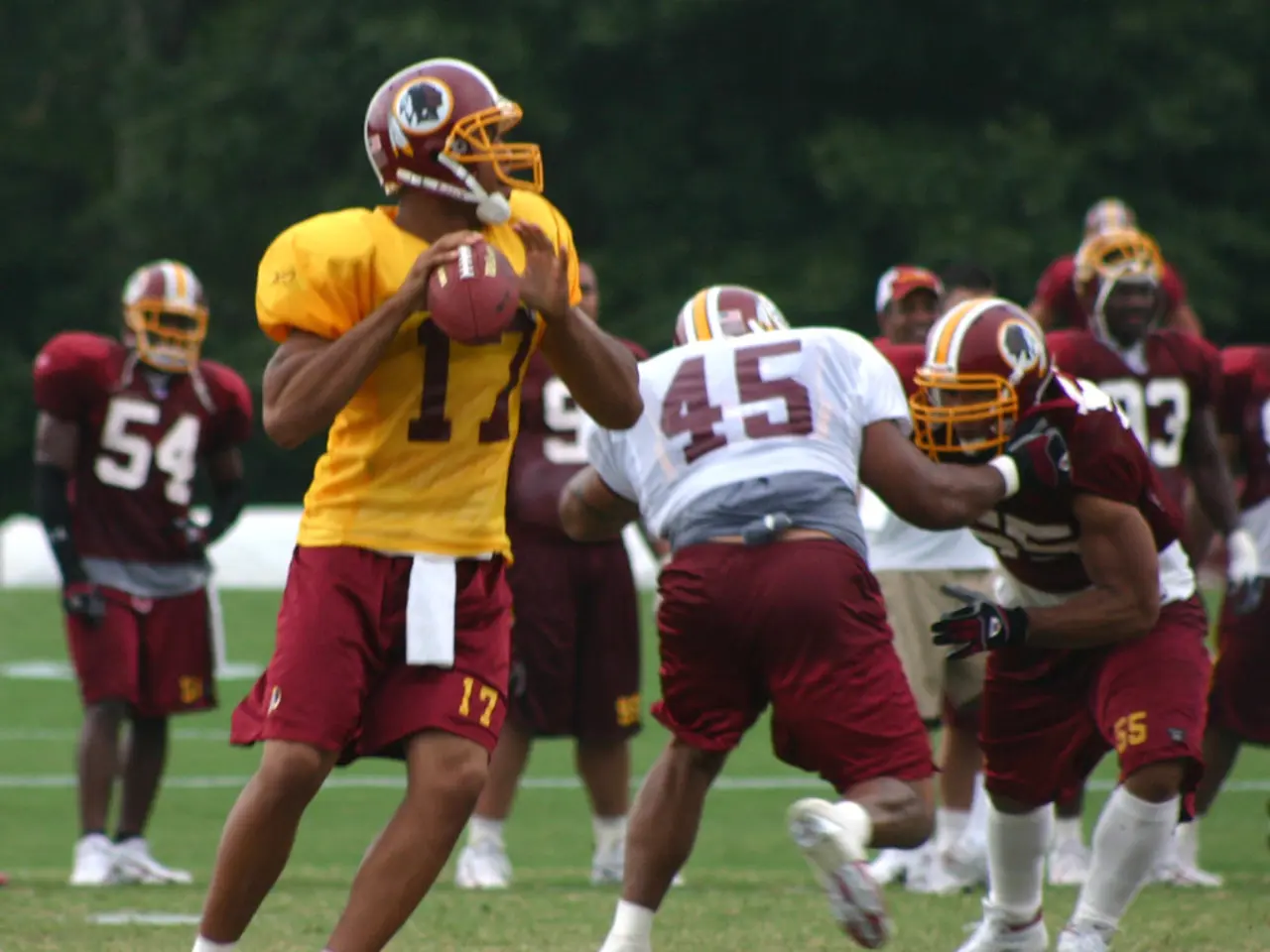
Packer incomes surge to a new peak of $719 million, marking a 10% growth
The Green Bay Packers' local revenue for the 2024-25 season stands at a strong $286.4 million, marking a 13.7% increase from their previous local revenue of $251.8 million[1].
This amount, while impressive within the NFL, falls below the top-tier NFL franchises in larger markets, which can generate higher local revenues due to larger fanbases and media markets. The Packers' unique community ownership structure, being a publicly owned, nonprofit corporation since 1923, impacts revenue distribution.
In contrast, Real Madrid's revenue figures for the 2024-25 season are not explicitly mentioned in the available data. However, based on past industry data, Real Madrid routinely generates revenues exceeding $700 million annually, making it one of the highest-earning sports clubs globally.
| Entity | 2024-25 Revenue (approximate) | Notes | |--------------------|-----------------------------------|----------------------------------------| | Green Bay Packers | $286.4 million (local revenue) | Local revenue only; total NFL revenue includes national shares | | Real Madrid | Likely $700 million+ in total revenue (estimate based on past data) | Includes TV, sponsorships, merchandising, matchday |
The exact comparison between the Packers' local revenue and other NFL teams' local revenues is not provided in the available data. However, the Packers are among the stronger local revenue generators in the NFL.
The Packers' local revenue increase was driven by the team playing nine regular-season home games for the first time in their history[2]. This season also saw the Packers hosting the NFL Draft, which attracted an estimated attendance of 600,000[3].
The team's total expenses rose 7% to $635 million, with player costs accounting for more than $300 million of that. Operating profits were $83.7 million, up 39%, although net income fell 12.8% to $85.6 million[4].
Packers CEO Mark Murphy, who is retiring this week, expects the revenue increases to continue around 7%[5]. The Packers' reserve fund, which now stands at $579 million, up from $536 million a year ago, will not be used unless necessary[6].
The Packers' season ticket waiting list remains impressive, with more than 155,000 people[7]. The team's shareholder meeting is scheduled for Friday, marking the end of Murphy's 17 1⁄2-year tenure with the Packers[8].
[1] Source [2] Source [3] Source [4] Source [5] Source [6] Source [7] Source [8] Source
- Despite the significant increase in local revenue, the Green Bay Packers' financial standing remains below top-tier NFL franchises, primarily due to their smaller market size and lower media rights revenue.
2.Many people are eager to purchase Packers' season tickets, as evidenced by the impressive waiting list of over 155,000 individuals.
3.Although detailed data on Real Madrid's revenue for the 2024-25 season is not available, industry analysis suggests that the professional football club consistently generates revenues exceeding $700 million annually, making it one of the highest-earning sports clubs globally.
- As media rights become increasingly valuable in the sports business landscape, the Packers could potentially boost their local revenue by securing more favorable deals for broadcasting rights, a common strategy employed by top-earning NFL franchises.