
Preserving the switch to renewable energy is crucial for safeguarding our natural resources, water supply, and agriculture.
Elisa Morgera, the United Nations' Special Rapporteur on human rights in the context of climate change, is at the forefront of the battle to link human rights and climate policy. Her role is to monitor, advise, and report on how governments and businesses can better integrate human rights protections into climate policies, with a focus on ending fossil fuel dependency urgently and fairly to secure a livable planet for current and future generations.
Morgera has been vocal about the urgent need to phase out fossil fuels and eliminate related subsidies within the current decade. She emphasizes that fossil fuels are the primary driver of climate change, biodiversity loss, and widespread human rights violations.
One of Morgera's key reports focused on the phase-out of fossil fuels as a matter of international human-rights law. Another report highlighted the need to adopt a human rights-based approach to renewables, including critical minerals, which are essential for clean technologies. A third report called for the "defossilisation" of our economies, urging businesses to share information about their activities and value chains with the public, create spaces for dialogue, and accept complaints if actions do not protect human rights.
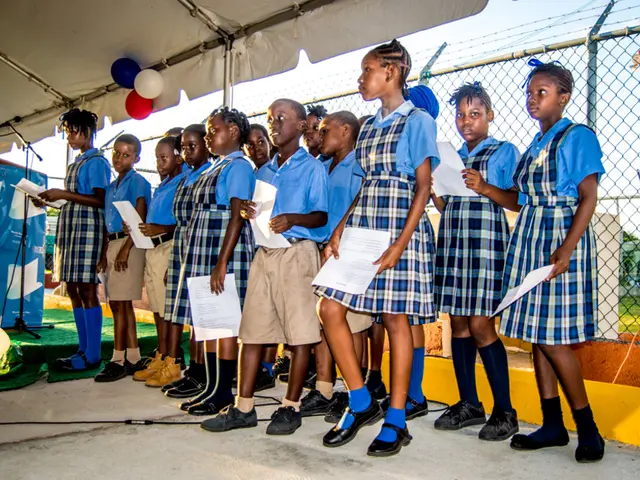
Morgera has also visited the Pacific island nation of Vanuatu to report on climate and human-rights action. She emphasized the need for a clear process to monitor progress in phasing out fossil fuels and for businesses to assess potential negative impacts on human rights and take preventive action.
The Inter-American Court of Human Rights, in its recent advisory opinion on the climate emergency, underscored the need to protect the climate as part of the life-supporting systems on this planet. Morgera's upcoming report will focus on a human rights-based approach to renewables, including critical minerals.
However, Morgera's work is not without challenges. Weaknesses in global climate governance include insufficient inclusion of biodiversity, ocean, health sciences, and the experience of people affected by climate change. Lobbying and the power of certain industries in climate policy spaces is another challenge, diverting attention from priority climate issues.
As the COP30 climate summit approaches in Brazil, Morgera's call to action is clear: the summit must address inclusivity in the decision-making process, conflict of interest, and monitoring progress in phasing out fossil fuels. The success of COP30 is questionable if expectations are not met, raising questions about its legitimacy as a space for meaningful climate action.
In conclusion, Elisa Morgera's work is crucial in framing climate change not just as an environmental issue, but fundamentally a human rights issue. By highlighting the severe, interlinked, and intergenerational human rights harms caused by fossil fuel extraction, production, and consumption, Morgera calls for transformative climate action that respects human rights, protects vulnerable populations, and promotes equitable access to natural resources like water and food.
[1] Morgera, Elisa. (2022). Report of the Special Rapporteur on the promotion and protection of human rights in the context of climate change on the phase-out of fossil fuels as a matter of international human-rights law. United Nations Human Rights Council.
[2] Morgera, Elisa. (2023). Report of the Special Rapporteur on the promotion and protection of human rights in the context of climate change on the human rights-based approach to renewables, including critical minerals. United Nations Human Rights Council.
[3] Morgera, Elisa. (2024). Report of the Special Rapporteur on the promotion and protection of human rights in the context of climate change on the need to "defossilise" our economies. United Nations Human Rights Council.
[4] Morgera, Elisa. (2025). Report of the Special Rapporteur on the promotion and protection of human rights in the context of climate change on the need to criminalize disinformation from the fossil fuel industry. United Nations Human Rights Council.
This article was originally published on Dialogue Earth under a Creative Commons license.
- Elisa Morgera, the United Nations' Special Rapporteur on human rights in the context of climate change, seeks to link human rights and climate policy, focusing on ending fossil fuel dependency urgently and fairly.
- Morgera has advocated for phasing out fossil fuels and eliminating related subsidies by the decade, seeing them as the primary driver of climate change, biodiversity loss, and human rights violations.
- Morgera's reports focus on various aspects of this transition, including international law, renewable energy, and the need for businesses to embrace transparency and human rights protection practices.
- During her visit to Vanuatu, Morgera emphasized the importance of monitoring progress in phasing out fossil fuels and ensuring businesses consider potential human rights impacts.
- The Inter-American Court of Human Rights has echoed Morgera's sentiments, highlighting the necessity to protect the climate as part of life-supporting systems on Earth.
- Despite her efforts, Morgera faces challenges; weaknesses in global climate governance include insufficient inclusion of various sciences, biodiversity, and the experiences of those affected by climate change.
- As the COP30 climate summit approaches, Morgera calls for inclusivity in decision-making, addressing conflicts of interest, and monitoring progress in fossil fuel phase-out, ensuring the summit's success and legitimacy as a space for meaningful climate action.