
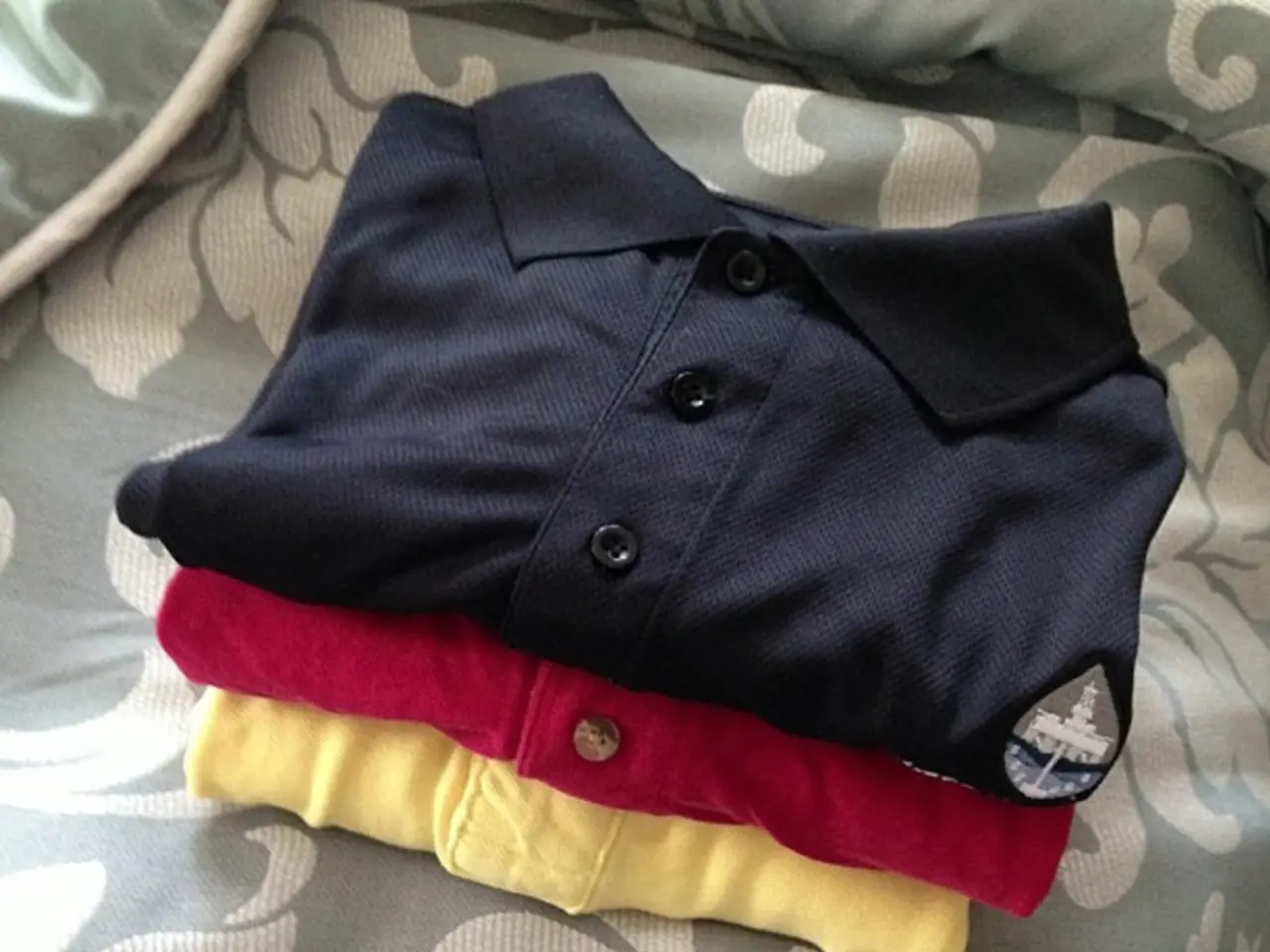
Strategies for Outsourcing Garment Production: A Study of Advantages and Disadvantages for Smaller Fashion Enterprises
As small fashion businesses grow, finding the right manufacturer becomes crucial. This article outlines a structured approach to identifying and vetting manufacturers that cater to small-scale needs, focusing on product quality, sustainability, scalability, and brand reputation.
**Define Your Requirements**
- Clearly outline product specifications, target market, fabric preferences, and any custom features. - Determine minimum order quantity (MOQ) requirements, as many manufacturers now cater to small businesses with low MOQs. - Decide if ethical labor practices, eco-friendly materials, or sustainability certifications are priorities for your brand. - Set a realistic budget per unit, considering both manufacturing and shipping costs.
**Research Potential Manufacturers**
- Utilize reputable B2B platforms, industry directories, and lists of top private label and white label manufacturers. - Attend trade shows, join fashion industry forums, and seek referrals from other small brands.
**Evaluate Manufacturers**
| Criteria | What to Look For | Example Manufacturers | |-------------------------|----------------------------------------------------------------------------------|-------------------------------| | **Experience** | Proven track record with small brands, knowledge of your niche | Changda Garment, Billoomi | | **Quality Assurance** | Robust QC processes, sample testing, third-party audits | Billoomi, ZSO Garment | | **MOQ & Scalability** | Low minimums, flexible order sizes, ability to scale as you grow | Gildan, Changda, Billoomi | | **Sustainability** | Use of organic/recycled materials, ethical labor, recognized certifications | Billoomi, Hanesbrands | | **Lead Time** | Realistic and reliable production timelines | Changda (15–30 days) | | **Customization** | Options for private labeling, custom designs, embroidery, etc. | Billoomi, Alibaba suppliers | | **Certifications** | ISO, WRAP, SA8000, GOTS, OEKO-TEX | Hanesbrands, Billoomi |
**Initiating Contact and Sample Orders**
- Order samples to assess quality, fit, and finish before committing to a larger order. - Contact other brands they’ve worked with to gauge reliability and communication. - Discuss details and provide clear technical packs to minimize errors. - Negotiate pricing, payment terms, shipping, and potential for reorders.
**Consider Geographic Location**
- Local manufacturers may offer faster turnaround and easier communication, while overseas options often provide lower costs and specialized services for small batches. - Factor in shipping times and import duties if sourcing internationally.
**Recommended Manufacturers for Small Fashion Businesses**
- Billoomi Fashion (India) - Changda Garment - Gildan Activewear (Canada/USA) - Hanesbrands (USA) - ZSO Garment (China) - Alibaba Suppliers
**Red Flags to Avoid**
- Lack of Transparency - Poor Communication - No Sample Policy - Unrealistic Promises
In an era where sustainability and ethical practices are in greater demand, outsourcing manufacturing enables fashion companies to focus on design, branding, and marketing while entrusting the intricate details of production to specialist manufacturers. As technology improves, production processes are becoming more automated, and fast fashion manufacturers who can adjust to quick changes in design and short manufacturing runs will remain competitive. Collaborative partnerships may become more common in the future, involving tight collaboration between brands and manufacturers. An ERP solution can simplify the outsourcing process, while manufacturers offering data-driven insights into consumer patterns and demand predictions will be desirable partners. Blockchain technology can improve supply networks' authenticity and transparency.
- In the pursuit of growth, fashion businesses must carefully select manufacturers, prioritizing quality control, sustainability, and brand reputation.
- For small-scale businesses, evaluating manufacturers may require understanding their experience, minimum order quantities, lead times, and commitment to customization.
- Finance plays a crucial role in manufacturer selection, with budget per unit considerations accounting for both manufacturing and shipping costs.
- As the fashion-and-beauty industry evolves, prioritizing synchronization between lifestyle trends, ethical practices, and business objectives becomes paramount when choosing a manufacturer.




